


Mastering the art of docking a boat is an important skill for any boater. It’s the moment when you need to combine precision, control, and patience to safely and smoothly maneuver your boat into a slip or alongside a dock. If you’re wondering how to dock a boat by yourself, we’ve got you covered. With years of experience handling both pre-owned and new boats for sale at Dyer Marine, we’ve compiled a list of boat docking techniques and useful tips to help you dock with confidence, every time.
Step 1: Understand Your Boat’s Propulsion System
Before you start docking, it’s important to understand how your boat’s propulsion system will affect how it moves, especially when reversing. Different types of boats, such as inboard and outboard motors, respond differently when put in reverse. For example, inboards with right-hand rotation props will make the boat move to the right when reversing. Knowing this can help you anticipate how your boat will behave when docking.
If you’re unsure how your boat responds, it’s a good idea to practice in an open area to get a feel for its movement. Learning about your boat’s handling and how it behaves in reverse is important when you’re approaching a tight space like a dock.
Step 2: Approach the Dock Slowly
One of the most important boat docking techniques is to approach the dock slowly. Trying to dock too quickly can lead to mistakes, especially in windy conditions or when you’re navigating a tight space. Slow down and make small, controlled adjustments to your speed and direction.
As you get closer to the dock, keep your arm planted on the armrest, and make subtle movements with your hand and wrist, rather than using large motions with your entire arm. This will give you better control of the throttle and allow for more precise movements toward the dock.
Step 3: Align the Boat Properly
Alignment is key to getting the boat parallel to the dock. When approaching, it helps to angle the boat slightly, usually to the right. This is because when you put the boat in reverse, it will naturally drift to the right, making it easier to straighten out. This small angle will set you up for a smoother and more controlled entry.
Once the boat is parallel to the dock, you can make small adjustments, either forward or reverse, by tapping the throttle in and out of gear. This allows you to position the boat exactly where you want it, without overcorrecting or rushing the process. You may proceed to anchor the boat to secure it in place.
Step 4: Get Help from Your Crew (If You Have One)
While docking a boat by yourself is a skill many boaters need to develop, there’s no harm in asking for help when possible. Once the boat is close to the dock, they can help by grabbing the dock cleats or lines to secure the boat in place. This teamwork ensures the boat stays put while you focus on maneuvering.
For solo dockers, it’s helpful to have fenders ready on the side of the boat that will be closest to the dock. These protective cushions will prevent your boat from coming into direct contact with the dock, reducing the risk of damage.
Step 5: Practice Makes Perfect
Like any skill, boat docking techniques improve with practice. The more you practice, the more confident you’ll feel maneuvering your boat in and out of tight spaces. If you’re new to docking or looking to improve your skills, find a no-wake buoy or other floating reference point in open water, and practice approaching it without worrying about hitting anything. This will help you develop your skills and get a feel for how your boat handles.
If you’re in the Mooresville or Lake Norman areas, Dyer Marine often hosts demo days and training sessions. Check with us for upcoming opportunities to practice and refine your docking skills in a supportive, relaxed environment.
Step 6: Use Docking Assistance Technologies (If Available)
Many modern boats, including the pre-owned boats for sale at Dyer Marine, come equipped with docking assistance technologies to make the process easier. For example, some boats feature stern thrusters or bow thrusters, which provide additional control over the boat’s movement, especially when it’s in a tight spot. These systems can rotate the boat 360 degrees in under 30 seconds, making docking in tight spaces much simpler.
If your boat has these features, take advantage of them when docking. They allow you to adjust the boat’s position quickly and easily, without the need to shift gears or make sudden movements.
Step 7: Docking a Boat by Yourself
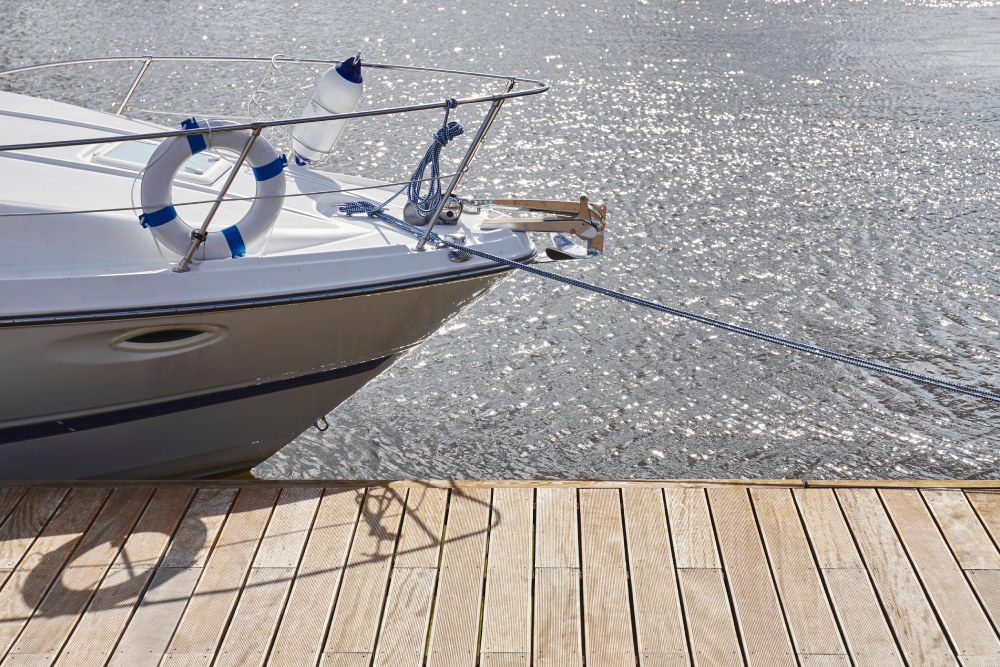
Docking a boat by yourself can be intimidating, but with practice, you’ll gain the confidence to do it with ease. When you’re docking solo, approach the dock at a slight angle to give yourself more flexibility when shifting into reverse. When you’re in position, use dock lines to secure the boat to the dock. These lines should be taut enough to prevent the boat from drifting but not so tight that they restrict the boat’s movement.
For extra stability, consider using extra dock lines or additional fenders to keep the boat from swaying. While it may take a few attempts to get the hang of it, solo docking becomes much easier with experience.
Step 8: Secure the Boat Properly
Once your boat is in position, securing it is the next step. Be sure to tie the bow and stern lines at different angles. This ensures the boat stays in place from both the front and rear, preventing it from shifting with the current or wind.
Additionally, remember that the lines should be tight enough to hold the boat in place but loose enough to allow for some movement, especially if the water levels rise or fall. Securing the boat properly reduces the risk of damage from weather conditions or other boats.
Step 9: Perform Regular Maintenance
Proper maintenance of your boat plays a significant role in how to dock a boat successfully. A well-maintained boat will respond better when docking, as everything will be functioning as it should. Regularly check your engine, propeller, and control systems to ensure that there are no issues that might complicate docking.
Whether you’re in need of a new boat or considering upgrading to a pre-owned boat, take a look at Dyer Marine’s inventory. Our selection includes new boats for sale and a variety of pre-owned boats for sale, ensuring that you find the right boat for your needs. Plus, our team can help you get your boat in top condition with mobile service and seasonal prep.
Dock with Confidence and Find Your Perfect Boat at Dyer Marine
With the right boat docking techniques and a little practice, you’ll soon be docking your boat like a seasoned pro. Whether you’re new to boating or just looking to refine your skills, Dyer Marine is here to help. We offer a wide range of new and pre-owned boats to suit every boater’s needs, plus expert guidance to make sure you enjoy a seamless experience on the water.
Contact us today to explore our new boats for sale or browse our pre-owned boats for sale online. Our team is excited to help you find the perfect boat and offer all the support you need to make your boating experience smooth and enjoyable.