




Quick Summary
Bay boats, center consoles, flats skiffs, bass boats, pontoons and offshore sportfishers each suit different water and different days. Hull design, draft, seating and storage matter more than length. Matching the boat to where you actually fish, and who comes along, decides the right style.
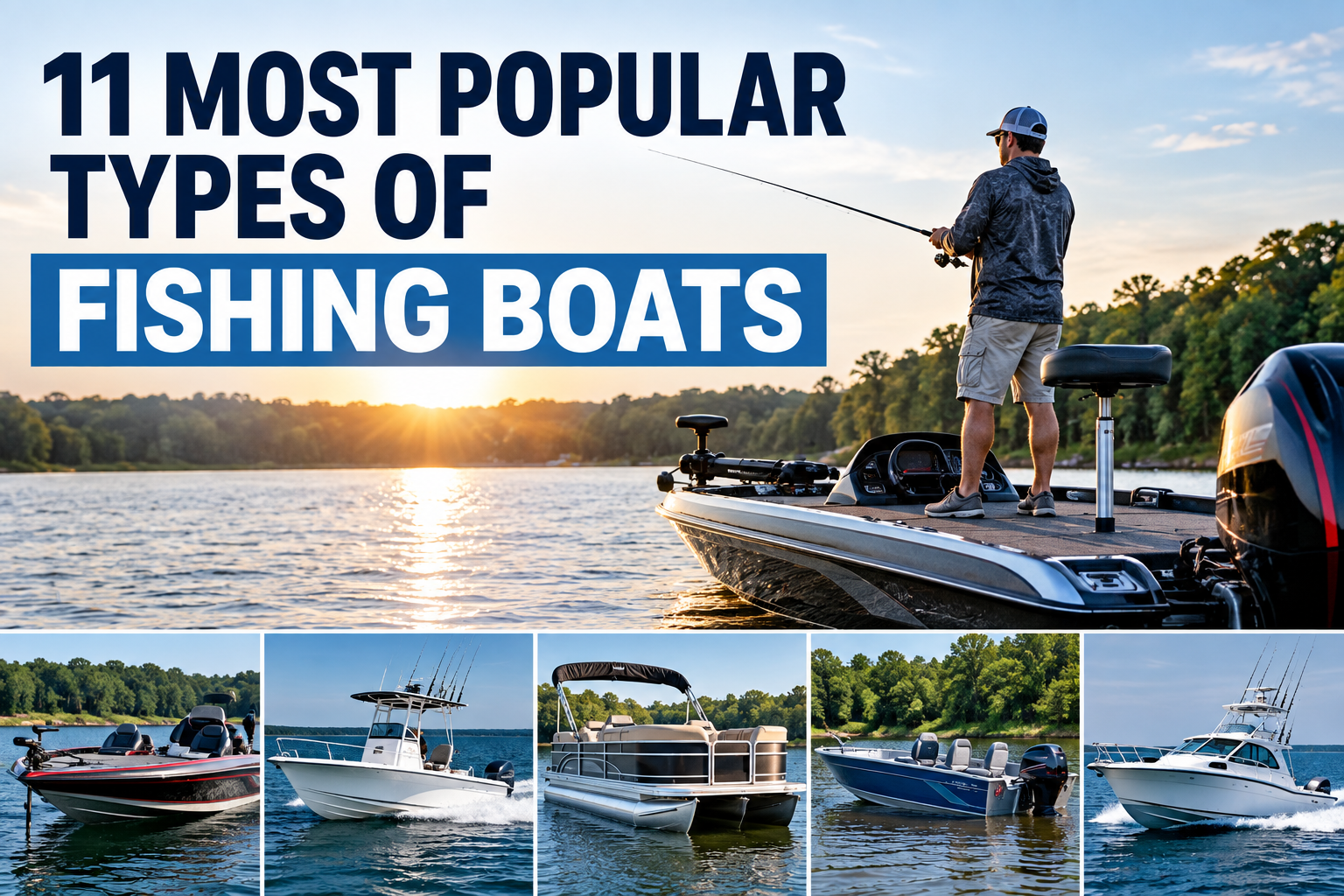
Choosing among the many types of fishing boats becomes easier when you match the hull, layout, and power to your usual water. Some fishing boat types favor quiet creeks, while others carry families across open lakes or run offshore. Together, this recreational overview and beginner guide cover popular fishing boat styles for solo anglers, tournament crews, and relaxed weekend groups.
Fishing Kayaks for Quiet, Shallow Water
For solo anglers who want low running costs and access to water nothing else can reach, a fishing kayak is hard to beat, slipping into narrow coves, creeks, and marsh edges without fuss. Sit-on-top layouts leave room for tackle, while pedal drives free both hands for casting.
The trade-off is capacity. A kayak loads onto a roof rack and launches anywhere there is a bank, which makes it the most portable of the compact fishing boats on the water, though limited storage and a single seat suit it better to a focused morning than a family afternoon.
Jon Boats for Calm Inland Waterways
Flat-bottomed hulls keep jon boats steady on calm ponds, rivers, creeks, and small lakes, which is where most of them spend their lives. Common models run roughly 10 to 20 feet and move under oars, a trolling motor, or a small outboard, depending on how far you intend to go.
Simple aluminum construction keeps both weight and upkeep manageable, and that plainness is much of the appeal.
Bass Boats for Fast Freshwater Fishing
Bass boats bring together a shallow draft, raised casting decks, live wells, organized tackle storage, and an outboard with genuine power behind it, all of it arranged around chasing largemouth or smallmouth across an inland lake.
Speed matters more here than it might sound, since tournament anglers often need to cover several productive areas before the morning bite fades.
Center Console Boats for Versatile Angling
Placing the helm near the middle of the boat leaves walkable deck space all the way around it, so an angler can follow a fish from bow to stern without a cabin getting in the way. That open layout is the entire point of the design.
High freeboard and self-draining decks give many models the capability to handle lakes and coastal water alike, which is part of why center consoles turn up on almost every kind of water.
Dual-Console Boats for Family Fishing Trips
Dual-console designs sit the helm and companion console on opposite sides with a protected passage running between them, and the result is a boat that does considerably more than fish. Seating, wind protection, and storage make them equally comfortable cruising, swimming, or towing a tube.
For a family, that adds up to considerably more comfort than a stripped-down casting platform will ever offer.
Walkaround Boats for Fishing and Cruising
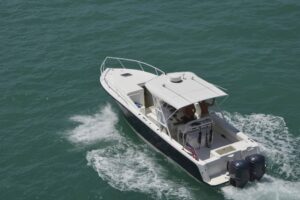
Walkarounds pair a small forward cabin with side passages that let anglers move around the deck. Many measure 18 to 30 feet, leaving room to cast, handle dock lines, or fight a fish.
The cabin earns its space by adding shade, storage, and somewhere to rest, which suits owners who mix freshwater angling with coastal trips and casual cruising.
Power Catamarans for Rough Offshore Conditions
Riding on two hulls gives power catamarans a wide, stable platform with noticeably less side-to-side roll, and the design tends to soften travel through chop while using fuel more efficiently than a comparable monohull.
The broad beam also opens up working space, which counts for a great deal when several anglers are fishing at once.
Convertible Sportfishing Boats for Bluewater Pursuits
Convertible sportfishing boats are built for offshore species including marlin, tuna, and sailfish, and everything about them reflects that ambition. Large cockpits, inboard diesel power, extensive electronics, and an upper helm station help a crew manage long runs and demanding fights.
Cabins add comfort, but the size brings higher fuel, dockage, and maintenance costs. These machines fit committed offshore anglers rather than occasional lake use.
Bay Boats for Coastal Versatility
Bay boats typically combine raised casting decks, outboard power, and enough freeboard for protected coastal water, and most span about 19 to 26 feet, which keeps them trailerable and opens up far more launch options.
What makes them popular is the moderate draft, since it bridges shallow flats and deeper bays without forcing a compromise either way, and that balance attracts anglers who want one boat for inshore fishing and family rides.
Flats Skiffs for Skinny-Water Access
Flats skiffs use shallow drafts to cross water that deeper hulls simply cannot reach, and some will operate in around 12 inches, which makes them formidable for sight-fishing in sheltered coastal areas.
A low profile keeps wind resistance down while poling, and on a still morning that difference is the whole game.
Runabout Boats for Fishing and Family Fun
Runabouts cover bowriders, deck boats, and other compact powerboats built for general recreation rather than serious angling, where seating, storage, and a manageable size let owners mix casual fishing with swimming, beach stops, cruising, and beginner watersports.
They lack some specialized angling features, yet that flexibility is exactly what suits households with varied interests, and most trailer easily between lakes.
Match the Boat to Your Favorite Water
Start with where you fish, how many people join you, and how much gear you carry. Compare draft, freeboard, deck access, seating, range, storage, towing weight, and long-term care instead of choosing on appearance alone.
New models can bring current electronics and custom options, while our selection of pre-owned boats for sale at Dyer Marine may offer greater value. A thoughtful comparison turns a broad list into a boat that fits fishing plans and family time.
Let our team at Dyer Marine help you compare Pathfinder bay boats, other premium models, financing, and certified mobile service for life after the sale. Contact us to choose a boat that feels right from the first cast to the ride home.
Frequently Asked Questions
Which type of fishing boat is best for freshwater lakes?
Bass boats are strong choices for dedicated freshwater anglers because they have shallow drafts, raised casting decks, live wells, and organized tackle storage. Jon boats work well on smaller lakes, ponds, and calm rivers. Families who also enjoy cruising or watersports may prefer a dual-console boat or runabout.
What is the difference between a bay boat and a flats skiff?
A bay boat has more freeboard and handles deeper bays, moderate chop, and longer coastal runs more comfortably. A flats skiff has a much shallower draft and low profile for reaching skinny water. Bay boats generally carry more passengers and gear, while flats skiffs favor quiet sight-fishing in sheltered areas.
Which fishing boat works best for family outings?
Dual-console boats and runabouts suit families because they combine seating, storage, wind protection, and recreational flexibility. They can accommodate fishing alongside swimming, tubing, and cruising. A bay boat can also work well for families who want an angling-focused layout with enough comfort for casual rides.
What should I compare before buying a fishing boat?
Compare the boat’s draft, hull design, freeboard, passenger capacity, deck layout, storage, engine power, fuel use, and trailer requirements. Think about the water conditions you encounter most often and the distance you plan to travel. Maintenance costs and available dock space should also influence the decision.