




Quick Summary
Ownership delivers time outdoors, family routine and freedom to go when you want, which rarely appears on a spreadsheet. Most boats depreciate, so the case rests on use rather than resale. Frequency, storage, upkeep and honest budgeting separate a rewarding purchase from a costly one.
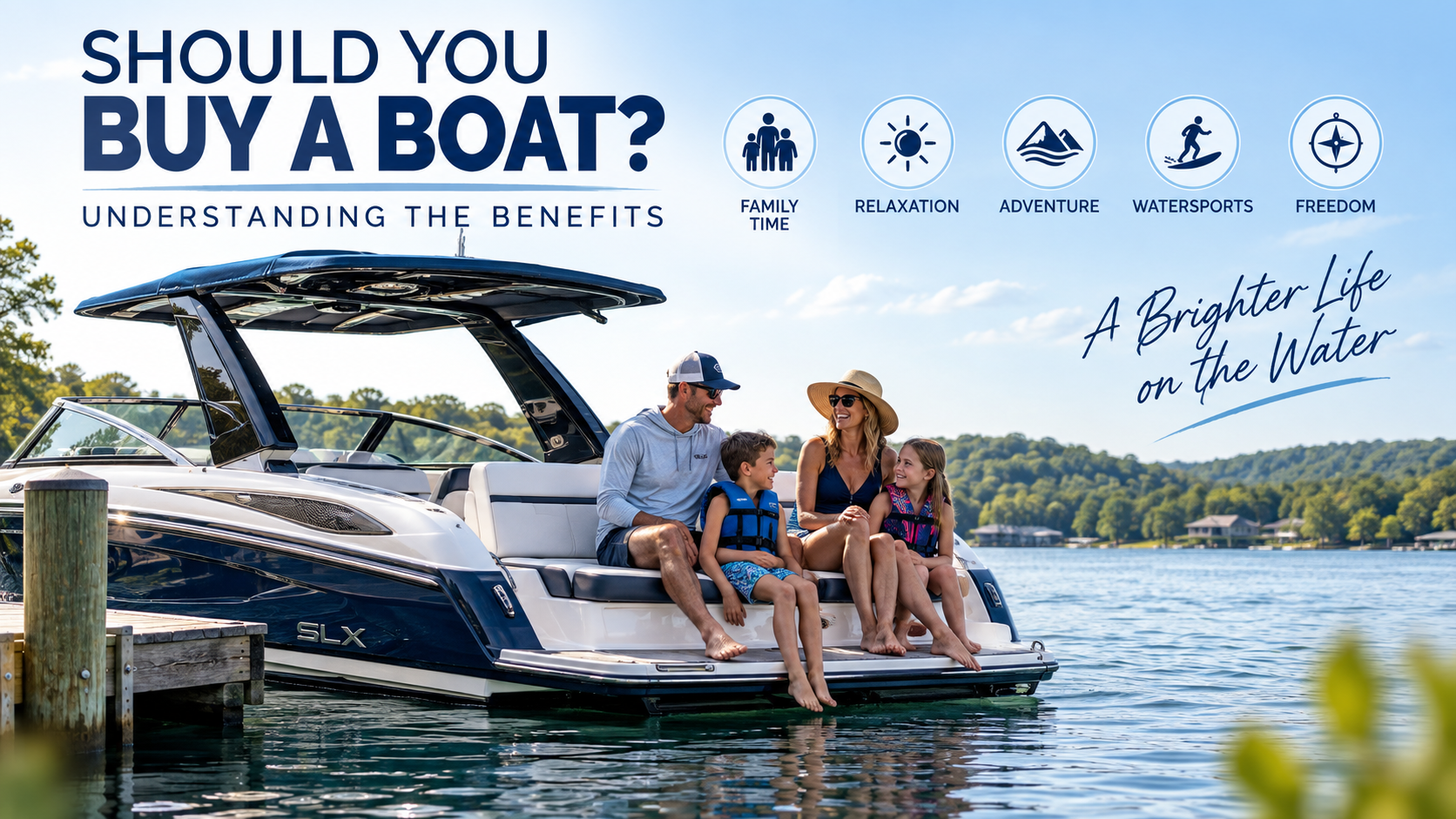
If you are asking, “Should I buy a boat?“, the answer begins with the life you want to enjoy on the water. Ownership can bring families together, create room for adventure, and turn ordinary weekends into experiences worth remembering. It also carries financial and practical responsibilities, so the right decision balances those benefits against your budget, schedule, and boating goals.
Should I Buy a Boat for My Lifestyle?
Start by picturing how you would realistically use a boat during a normal season. You might want relaxed pontoon cruises, early fishing trips, wake sports with teenagers, waterfront dining, or peaceful afternoons away from crowded places.
Your preferred activities will point you toward the right size, layout, engine, and features. Our new boats for sale at Dyer Marine include premium choices designed for water sports, fishing, family recreation, luxury cruising, and other lake experiences.
Frequency matters just as much as purpose, and if you live near the water, regularly plan lake weekends, or want boating to become a major family activity, ownership starts to make more sense than occasional rentals.
A boat should fit naturally into your routine instead of competing with it. Think about the boating season in your area, travel time to the launch, storage arrangements, and how many people will usually join you.
Enjoy More Freedom on the Water
One of the strongest benefits of ownership is the freedom to leave when the weather and your schedule align. You do not need to wait for a rental opening, accept a limited time slot, or return the vessel before your day feels complete.
You can take a short evening cruise after work, spend Saturday fishing, or plan an entire weekend around the lake. That flexibility makes spontaneous outings easier and gives you more control over each experience.
Ownership also opens access to destinations that are hard or impossible to reach from shore. Quiet coves, remote fishing areas, waterfront restaurants, swimming spots, and scenic stretches of shoreline become part of your recreational world.
You set the pace once you leave the dock. A fast-paced morning of wakeboarding can become a slow sunset cruise without changing reservations or following another company’s itinerary.
Create Stronger Family Connections
Modern families often spend their free time divided among screens, errands, work, and separate activities. A boat creates a shared setting where everyone can participate, talk, laugh, and learn together.
Parents can teach children how to tie knots, read changing weather, handle equipment, and respect the water. Those lessons build confidence and responsibility while creating traditions that may continue into adulthood.
Boating also works across generations, since children may enjoy tubing, teenagers may prefer surfing, adults can fish or entertain, and grandparents can relax aboard a comfortable pontoon.
The destination does not need to be elaborate. A familiar cove, a packed lunch, and an afternoon swim can become the kind of family memory people recount for years.
Turn Recreation Into Endless Variety
A well-matched boat gives you several forms of recreation in one purchase. Depending on its design, you can cruise, fish, swim, tube, wakeboard, surf, entertain guests, or spend a quiet afternoon reading on the water.
That range keeps ownership interesting as your family’s preferences change. You can enjoy an energetic morning behind the boat, anchor for lunch, and finish the day watching the sun drop behind the shoreline.
Different boat styles serve different priorities, so wake boats focus on performance and watersports, bay boats appeal to anglers, and pontoons offer generous seating for social outings and relaxed cruising.
Selecting the right category matters more than choosing the largest or most expensive model. The best boat is the one that makes your favorite activities comfortable, practical, and easy to repeat.
Find Space Away From Everyday Pressure
Time on the water can create a welcome break from deadlines, traffic, notifications, and household routines. The change in scenery encourages people to slow down and focus on what is happening around them.
A calm cruise offers a different kind of rest than staying home. Fresh air, open views, moving water, and fewer digital interruptions can make even a short trip feel refreshing.
Boating can also add movement to your leisure time. Loading gear, handling lines, swimming, cleaning the deck, and participating in watersports engage the body without turning the outing into a scheduled workout.
Some days will center on activity, while others will call for silence and a shaded seat. Ownership gives you the choice to shape each trip around your mood and energy.
Develop Useful Skills and Confidence
A boat introduces an enjoyable learning process that continues well beyond the first trip. Owners gain experience with navigation, docking, weather awareness, safety equipment, basic mechanical care, and responsible operation.
Handling a vessel can feel challenging at first, especially near a busy dock. Repeated practice builds confidence, and tasks that once demanded intense concentration gradually become familiar.
Boat ownership also encourages planning, and captains learn to check fuel, inspect equipment, prepare passengers, choose suitable routes, and respond calmly when conditions change.
These skills carry value well beyond recreation, encouraging patience, sound judgment, personal responsibility, and respect for the environment and other people using the water.
Build Friendships Through Boating
Ownership tends to introduce people to a wider community than they expected, since marina neighbors, fellow anglers, watersports families, dealership events, and local clubs all create natural openings for conversation and friendship.
Boaters trade route ideas, maintenance tips, fishing knowledge, and recommendations for places worth the run, and that shared interest makes connections easier to form across different ages and backgrounds.
Organized gatherings add another dimension to ownership, and demo days, surf expos, owners’ reunions, and community programs help newcomers learn while experienced boaters sharpen their abilities.
A strong boating community turns the purchase into something larger than a vessel in a slip, bringing invitations, traditions, shared knowledge, and a real sense of belonging around lake life.
Enjoy Comfort Tailored to Your Preferences
Your own boat gets arranged around the people and the activities that matter to you, which means familiar safety gear, watersports equipment, fishing tackle, refreshments, towels, and personal items stay aboard and ready for the next outing.
Premium models bring plush seating, advanced audio, shade systems, touchscreen controls, generous storage, and finishes that hold up to a decade of sun, while larger vessels add sleeping quarters, compact kitchens, bathrooms, or protected spaces for longer trips.
This personal setup removes much of the uncertainty that comes with using an unfamiliar rental. You know how the vessel handles, where everything belongs, and which features make your group comfortable.
Pride of ownership also plays a role, since cleaning, customizing, and caring for a boat can become satisfying parts of the experience rather than unwanted chores for someone who genuinely enjoys lake life.
Is a Boat a Good Investment?
When people ask, “Is a boat a good investment?”, they often mix financial return with lifestyle value. If you are wondering, “Is buying a boat a good investment for you?”, it is important to separate the enjoyment and experiences a boat can provide from its potential monetary return. Most boats should not be treated as financial assets, since depreciation, maintenance, storage, fuel, and insurance can all work against financial gains.
The value of ownership often comes through use. Family time, recreation, travel, friendships, skill development, and memorable experiences can make a boat worthwhile over the years, even when it does not appreciate financially.
Strong resale appeal can still help protect part of the purchase price. Brand reputation, maintenance history, market demand, engine hours, overall condition, and thoughtful storage can all influence what a buyer may be willing to pay later.
Some owners also offset expenses through approved rental or charter arrangements. However, this approach requires suitable insurance, careful scheduling, additional upkeep, and compliance with applicable commercial rules, so it should never be treated as automatic income.
Choosing a Boat That Fits Your Lifestyle
Choosing the right boat starts with understanding how you actually plan to spend your time on the water. Think about how frequently you expect to go boating, the types of trips you enjoy, and whether the boat will become a regular part of your routine. A boat that matches your habits and interests is far more likely to deliver lasting enjoyment than one chosen without a clear purpose.
Your passengers should also influence your decision. Families may prioritize spacious seating, comfort, shade, and easy socializing, while anglers may need practical storage and fishing-focused features. Those interested in wake sports or other water activities may place greater importance on performance, handling, and specialized equipment.
Beyond the boat itself, consider what ownership will require from you. Cleaning, maintenance, storage, safety checks, launching, and general preparation all take time. Professional marine services can reduce some of the workload, but understanding these responsibilities helps ensure the ownership experience fits your schedule and expectations.
Before making a final decision, take the boat for a demo whenever possible. Test the visibility, seating, storage, handling, noise levels, boarding access, and overall comfort. Bring the people who will use it most and pay attention to how easily everyone moves around and settles in. A boat should feel practical and comfortable for the experiences you plan to create on the water.
New Vs. Pre-Owned Boats: Which Option Fits Your Needs?
A new boat suits buyers who want current technology, modern styling, factory warranty coverage, and the freedom to choose their own features, and it gives first owners complete knowledge of how the vessel has been run and maintained since day one.
A pre-owned model may offer more size or equipment within a fixed budget. Condition matters more than age alone, so buyers should review engine hours, service records, hull condition, electronics, upholstery, and the results of a professional inspection.
Our pre-owned boats for sale at Dyer Marine give buyers another path into boating without abandoning quality or performance. Comparing both inventory types can reveal which option best matches your priorities, budget, and expected years of ownership.
Financing terms and projected operating costs also deserve attention. Look at the entire ownership picture instead of choosing a vessel simply because its purchase price appears attractive.
Let our locally owned team at Dyer Marine help you compare premium new and pre-owned boats, arrange a demo, and plan for certified service and mobile maintenance. Contact us to find a boat that fits your family, favorite activities, and vision for life on the lake.
Frequently Asked Questions
Should I buy a boat if I will only use it during summer?
A boat may still be worthwhile if summer boating is a major part of your family’s lifestyle. Consider how many outings you expect each season and compare ownership expenses with rental costs. Storage, insurance, scheduled maintenance, and winter preparation will continue outside the boating season, so include them in your annual budget.
Is a boat a good financial investment?
Most boats depreciate, so they rarely behave the way stocks or real estate do. Their main return comes from recreation, family time, new skills, travel, and memorable experiences. Careful maintenance, low engine hours, a respected brand, and complete service records can help preserve resale value.
What type of boat should a first-time buyer choose?
Choose a model based on your main activity, usual passenger count, local water conditions, towing capacity, and storage arrangement. Pontoons suit relaxed gatherings, wake boats serve watersports enthusiasts, and bay boats work well for fishing. A demonstration ride can help you compare handling, comfort, visibility, storage, and boarding access.
Should I buy a new or pre-owned boat?
A new boat offers current technology, factory warranty coverage, and a known history from its first day. A pre-owned model may give you more space, power, or equipment for the same budget. Buyers considering a used vessel should review its service history, engine hours, hull, electronics, upholstery, and inspection findings.
What costs should I calculate before buying a boat?
Your budget should include the purchase price, financing, taxes, registration, insurance, fuel, storage, marina fees, safety equipment, cleaning, routine service, and seasonal preparation. Trailer expenses and towing needs may also apply. Calculating these costs annually creates a more accurate picture than looking only at the monthly payment.