



Quick Summary
North Carolina requires people born on or after January 1, 1988, to complete a NASBLA-approved boating education course before operating a vessel with a motor of 10 horsepower or greater on public waters. Take an approved instructor-led or online course, pass the exam, and keep proof aboard.
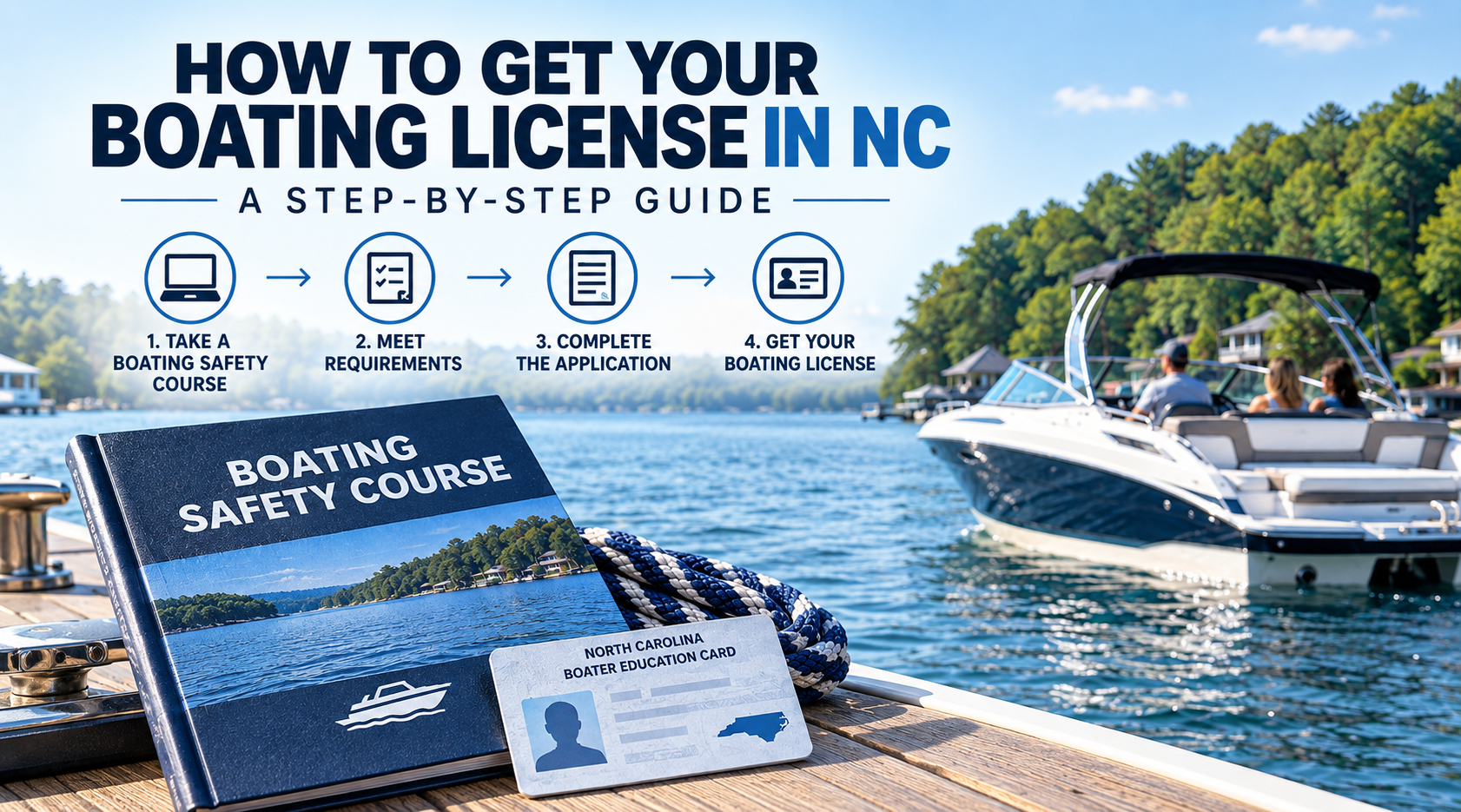
If you are learning how to get a boating license in NC, the process starts with boating safety education rather than a traditional state-issued license. North Carolina requires certain operators to complete an approved course before driving qualifying motorized vessels on public waters. The path from course enrollment to legal operation is straightforward.
Check If North Carolina Requires Boater Education
North Carolina requires anyone born on or after January 1, 1988, to complete a boating education course approved by the National Association of State Boating Law Administrators before operating a vessel powered by a motor of 10 horsepower or more. The requirement sits in G.S. 75A-16.2, which also lists the exemptions that apply. The rule applies on public waterways and covers qualifying motorboats regardless of vessel length.
If you are preparing for your first season on the water, this is a good time to think about the boating you want to enjoy. Our new boats for sale at Dyer Marine include options built for watersports, family cruising, fishing, and relaxed lake days.
Choose an Approved North Carolina Boating Course
The next step in how to get NC boating license credentials is choosing a NASBLA-approved course accepted by the North Carolina Wildlife Resources Commission. Approved options include instructor-led classes and online programs, so you can choose a format that fits your schedule.
NC Wildlife offers instructor-led boating education courses at no charge, while approved online and outside programs may charge a fee. Before enrolling, confirm that the specific course carries the required approval so your training counts under North Carolina law.
Complete the Boating Safety Course
Coursework covers the rules and the habits behind responsible operation, working through navigation rules, required safety equipment, emergency procedures, boating laws, alcohol risks, and safe handling around other vessels.
Take the material seriously even if you have spent years around boats. Formal instruction can clarify right-of-way rules, markers, life jacket requirements, and accident procedures that casual experience may miss.
Pass the Required Course Exam
After completing the lessons, you must pass the exam tied to your approved course. Instructor-led NC Wildlife courses require a comprehensive written exam completed without assistance, while approved online programs use their own testing format.
Approved online providers set their own passing scores and retake rules, commonly requiring around 80 percent. Check your selected course before you begin so the requirements hold no surprises.
Get Your Boater Education Certificate
Passing the approved course gives you proof of boating safety education. Many online programs let successful students print a temporary or completion certificate soon after passing, while permanent card options vary by course platform.
This credential is what people often mean when asking how to get a boating license in NC. North Carolina does not attach recurring renewal dates to it the way it does to a driver’s license; the card documents successful completion of the required training.
Carry Your Certificate While Operating
North Carolina requires affected operators to have proof of boater education aboard the vessel while operating a qualifying motorized boat. Keeping the certificate or accepted card with your boating documents makes it easy to show compliance if an officer asks for it.
Store the credential somewhere dry and easy to reach. A waterproof document pouch can keep boating paperwork organized without leaving important items loose in a storage locker.
Know the Rules for Personal Watercraft
Personal watercraft have age rules that deserve extra attention. North Carolina generally prohibits anyone under age 16 from operating a PWC, but a person who is at least 14 and under 16 may operate under specific statutory conditions, including qualifying education or adult accompaniment.
Operators born on or after January 1, 1988, also fall under the state boater-education requirement when it applies. Families with teenage riders should review current PWC rules before handing over the controls.
Prepare Yourself and Your Boat for the Water
Getting certified is only one part of a good lake day. Before launching, check registration, flotation devices, fire extinguishers, sound-producing equipment, lights, fuel, and other gear required for your vessel.
If you are still choosing your next boat, our pre-owned boats for sale at Dyer Marine include inspected options for different boating styles and budgets. Pairing the right vessel with good training makes ownership more enjoyable from the first launch onward.
Start Your North Carolina Boating Journey Ready
Learning the rules before taking the helm gives you more confidence around docks, channels, swimmers, and nearby boaters. Complete the approved course, pass the exam, carry your credential, and keep building sound habits every time you head out.
Once the certificate is in hand, the fun part starts. Our team can walk you through new and pre-owned boats, set up a demo on the water, and line up certified service or mobile maintenance so the boat is ready when you are. Contact Dyer Marine before your next season on the water.
Frequently Asked Questions
Do I need a boating license in North Carolina?
North Carolina does not issue a traditional boating license in the way it issues a driver’s license. However, anyone born on or after January 1, 1988, must complete a NASBLA-approved boating education course before operating a vessel powered by a motor of 10 horsepower or greater on public waterways. Qualified operators must also have their boater education certificate aboard while operating the vessel.
Can I get my North Carolina boating certificate online?
Yes. North Carolina accepts approved online boating education courses along with instructor-led options. The course must have approval from the National Association of State Boating Law Administrators for it to satisfy the state’s boater education requirement. NC Wildlife also offers instructor-led courses without a fee, while some online course companies charge for their programs or certificates.
What age do you need a boating certificate in North Carolina?
The main boating education rule is based on birth date rather than a single minimum operating age. Anyone born on or after January 1, 1988, must complete approved boating education before operating a vessel with a motor of at least 10 horsepower on public waters. Personal watercraft have separate age restrictions. A person under 14 cannot operate a PWC, while operators ages 14 and 15 must meet specific education or adult-accompaniment requirements.
Do I need to carry my boating certificate on the boat?
Yes, if North Carolina’s boater education requirement applies to you. Your proof of completed boating education should be aboard while you operate a qualifying vessel. It is a good practice to keep the certificate with your registration and other boating documents in a dry, accessible location.