



Quick Summary
Pontoon boats are widely recognized for their stability, buoyancy, and family-friendly design. Their wide platforms, protective railings, and forgiving handling make them a safe choice for lakes, rivers, and protected waterways. While they offer several advantages over many traditional boats, they perform best in calmer conditions and require responsible operation. Proper maintenance, weather awareness, and safe boating habits play a major role in maximizing both safety and enjoyment.
Pontoon boats have become a favorite among families, entertainers, and boating enthusiasts who appreciate comfort and space on the water. Yet many first-time buyers still ask, Are pontoon boats safe compared to traditional boats? The answer depends largely on where and how the vessel is used.
Modern pontoon boats feature stable platforms, enclosed decks, and advanced construction that make them one of the safest options for recreational boating in suitable conditions. Understanding their advantages, limitations, and proper operation can help owners enjoy a more confident and enjoyable experience on the water.
How Safe Are Pontoon Boats?
One of the primary reasons people ask how safe pontoon boats are is because their design differs significantly from traditional V-hull boats.
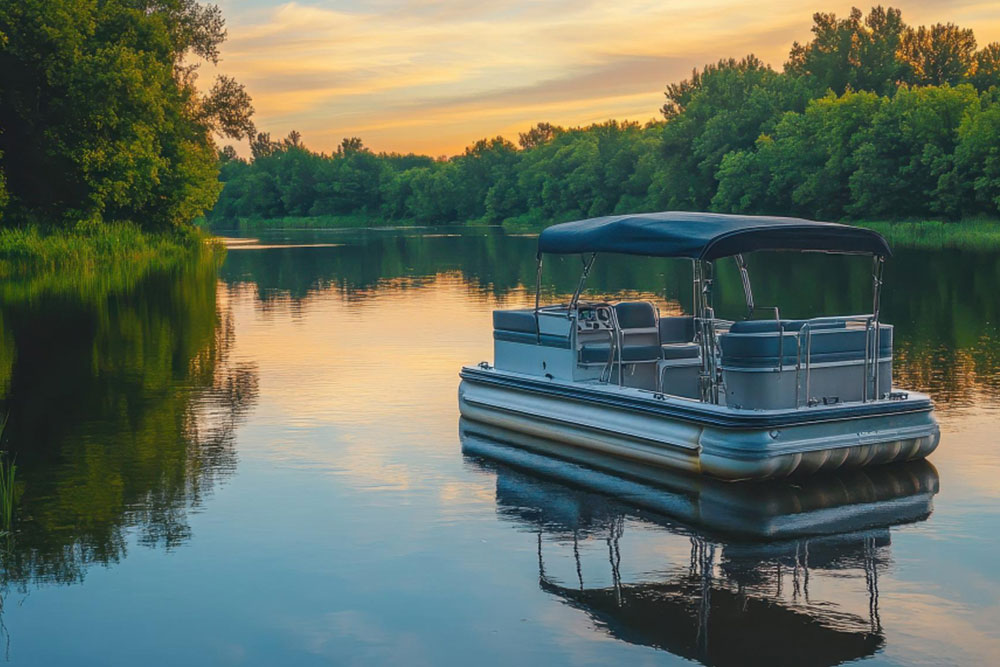
Instead of relying on a single hull, pontoon boats float on two or three aluminum tubes. This design creates a broad and stable platform that distributes weight evenly across the water. As passengers move around the deck, the boat remains remarkably balanced compared to many conventional vessels.
This stability offers several practical advantages:
- Reduced side-to-side rocking
- Better balance when passengers shift positions
- Easier boarding and disembarking
- Greater confidence for inexperienced boaters
For families with children, retirees, and groups of friends, this stability often creates a more comfortable and secure experience on the water.
Built-In Safety Features That Matter
Modern pontoon boats include several features that contribute directly to passenger safety.
One of the most noticeable advantages is the enclosed deck. High railings surround the perimeter, helping reduce the likelihood of accidental falls. This feature appeals to families who spend extended periods on the water with children or pets.
Another significant safety benefit comes from the pontoons themselves. The aluminum tubes contain sealed air chambers that create buoyancy. If one section sustains damage, the remaining chambers continue helping the boat stay afloat.
Additional safety-focused features often include:
- Non-slip flooring
- Wide walkways
- Easy access to seating areas
- Clear operator visibility
- Predictable low-speed maneuverability
These characteristics help explain why pontoons remain a popular choice for recreational boating.
How Pontoon Boats Compare to Traditional Boats
Every boat type serves a different purpose, so safety comparisons should always consider the intended environment.
Pontoon boats excel on calm lakes, protected bays, and inland waterways. Their stable platforms often make them more comfortable than traditional V-hull boats when passengers move throughout the vessel.
Traditional V-hull boats typically perform better in rough water because their hull shape cuts through waves more effectively.
In calmer conditions, pontoon boats often offer:
- More stability while stationary
- Greater passenger comfort
- Larger usable deck areas
- Easier movement throughout the boat
Meanwhile, V-hull boats generally maintain an advantage when navigating larger waves and more demanding water conditions.
The safest option ultimately depends on where the boat will spend most of its time.
Understanding the Limitations of Pontoon Boats
While pontoon boats have an excellent safety reputation, they are not designed for every environment.
Large waves, strong winds, and severe weather can create challenges. Pontoon boats sit higher on the water and present more surface area to wind than many traditional boats. As a result, strong gusts can affect steering and docking performance.
Heavy chop may also reduce ride quality and handling.
Another concern involves a situation known as deck diving. This can occur when a pontoon boat approaches a large wake or wave at excessive speed and an improper angle. Water may wash onto the deck, creating a potentially hazardous situation.
Responsible operators minimize these risks by adjusting speed, monitoring conditions, and avoiding rough water whenever possible.
Are Inflatable Pontoon Boats Safe?
Many buyers also wonder, ‘Are inflatable pontoon boats safe?’ Inflatable pontoon boats differ significantly from full-sized recreational pontoons. They are commonly used for fishing, hunting, and solo outings in calm waters.
Quality inflatable models use durable materials and multiple air chambers that add an extra layer of protection if damage occurs. However, they generally offer less capacity, stability, and protection than larger pontoon boats.
Their safety depends heavily on:
- Proper inflation
- Routine inspections
- Adherence to weight limits
- Suitable water conditions
For their intended use, inflatable pontoon boats can be safe and practical. However, they do not deliver the same level of comfort and stability associated with larger recreational pontoons.
The Importance of Keeping Your Boat in Optimal Condition
The importance of keeping your boat in optimal condition extends far beyond appearance.
Even a well-designed boat can become unsafe if maintenance is overlooked. Regular inspections help identify small issues before they become larger concerns that affect reliability or safety.
Owners should routinely inspect:
- Navigation lights
- Steering components
- Batteries
- Fuel systems
- Gates and railings
- Safety equipment
Engine maintenance also deserves close attention. Reliable performance helps reduce the likelihood of unexpected issues while on the water.
What to Look for in a Pre-Owned Vessel
A pre-owned vessel can be an excellent way to enter the boating lifestyle while managing costs, but buyers should pay close attention to safety-related factors.
A thorough inspection should include the pontoons, flooring, engine, electrical systems, and structural components. Visible signs of neglect may indicate hidden concerns that affect reliability.
Maintenance records can reveal how well previous owners cared for the boat and may help buyers make more informed decisions.
Safe Boating Habits Make the Biggest Difference
Boat design plays an important role in safety, but operator behavior often has an even greater impact.
Safe boating habits include:
- Checking weather forecasts before departure
- Carrying properly fitted life jackets
- Following passenger capacity limits
- Maintaining appropriate speeds
- Staying alert to surrounding traffic
- Keeping required emergency equipment onboard
Explore Pontoon Ownership With Confidence
A safe and enjoyable boating experience starts with choosing the right vessel and caring for it properly. At Dyer Marine, we help families and boating enthusiasts navigate every stage of ownership, from selecting the ideal pontoon boat to maintaining peak performance season after season.
If you are considering a new boat, evaluating a pre-owned vessel, or looking for trusted service from a team that lives the lake lifestyle, connect with Dyer Marine today and take the next step toward unforgettable days on the water.
FAQs
Pontoon boats are often safer in calm water due to their stable design, enclosed deck, and wide platform.
Pontoon boats rarely flip, but extreme weather, large waves, and improper operation can increase the risk.
Yes, quality inflatable pontoon boats can be safe when used within their intended capacity and in appropriate water conditions.